Counter-Strike players with more than 5,000 hours in the game react about 90 milliseconds faster than novices, according to a University of Sheffield study published on November 3, 2026. It's the closest thing to a lab answer for how quick high-level CS players really are. The more useful part is where those 90 ms come from.
The paper is called "Processing speed, not multitasking, drives expert decision-making under pressure," and it ran in the Journal of Experimental Psychology: Human Perception and Performance. The title gives the result away. Experts weren't better at juggling several things at once. They were faster at taking in what was on the screen and turning it into a click.
What the researchers tested
The university's press release describes more than 300 players, from beginners to experts. The published abstract, as Neuroscience News reports it, works with 230 players aged 16 to 34, sorted into four groups: Novice, Skilled, Emerging and Expert. The two counts don't match, and the paper's 230 is the one to go with. Everyone went through standard visual reaction tasks and a multitasking test that meant tracking several streams of information at the same time.
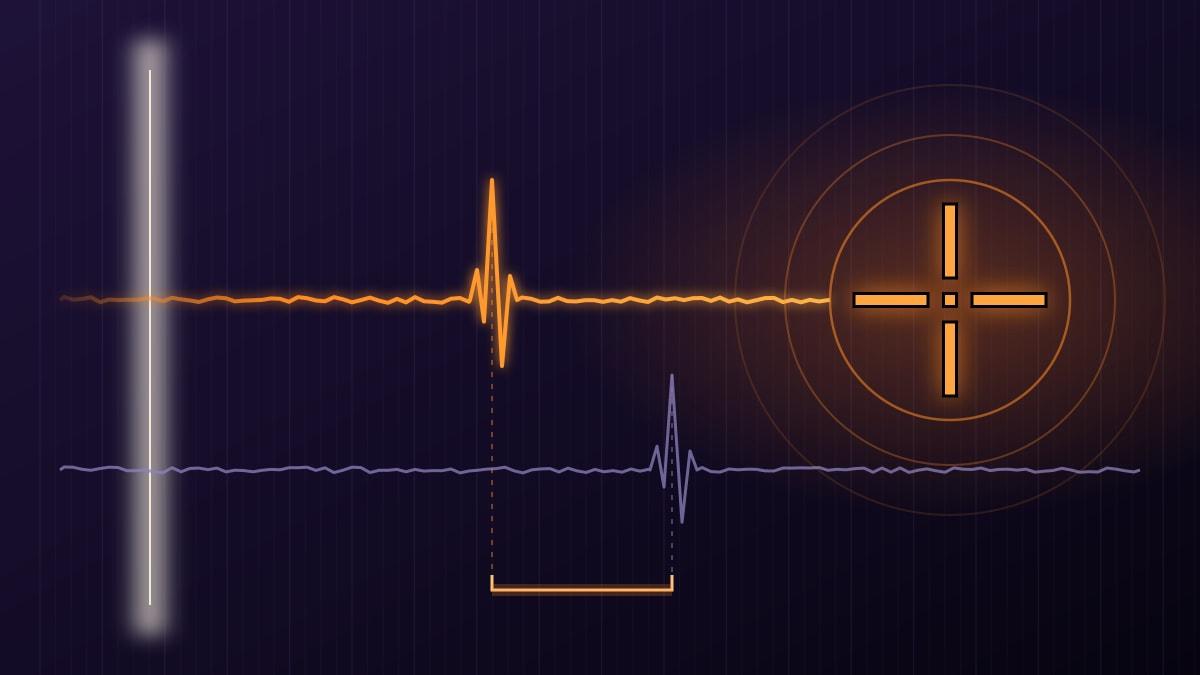
Then the team ran the results through a drift-diffusion model. If you haven't met one, it splits a single reaction time into four parts. There's the time it takes to encode what you see, the rate at which your brain piles up evidence for one answer, how much evidence you demand before you commit, and the time your hand needs to press the button.
Experts came out ahead on two of those. Their evidence built up faster, and their "non-decision" time (encoding plus the motor part) was shorter.
The third part didn't move. Experts demanded the same amount of evidence before committing as everyone else, which rules out the lazy explanation that they're just more trigger-happy. In CS terms, they read the situation sooner and still shot on the same information.
The multitasking result is the one that surprises people. "Our findings suggest that expert players are not necessarily better at juggling several things at once," said Professor Claudia von Bastian, who studies cognitive psychology at Sheffield. In the complex multitasking scenarios, experts still gathered the evidence for a decision more quickly, but the general multitasking edge that every "gamers are better at everything" headline assumes wasn't there.
Who counts as an expert
5,000 hours sounds like a lot until you do the math. At four hours a day, it takes about three and a half years. A full-time pro who practises eight hours a day crosses the line in under two.
So the expert group is made of people who have played a lot of Counter-Strike, with no requirement to be a pro, and the 90 ms gap is the average difference between that group and beginners. The study didn't put a tier-1 lineup through the tasks, so it can't hand you donk's or ZywOo's number. What it gives you is the size of the gap between beginners and players who've put in the hours.
Lead author Eleanor Hyde was clear about the other limit: "At this stage, we don't have the data to determine whether this reaction speed is a result of playing the game for hours on end or if people with naturally faster processing abilities gravitate toward these games." Both stories fit the data. Thousands of hours may build fast processing, or fast processors may be the people who stick with Counter-Strike long enough to rack up those hours.
How big 90 milliseconds is
On this site's reaction time test, the global average is 273 ms, and most people land somewhere between 180 and 280 ms. A 90 ms gap is about a third of that average. It's also roughly the distance between untrained people in their early twenties (222 ms) and people in their sixties (310 ms) in the age data this site publishes.
Put it on a server. Valve's matchmaking servers run at 64 ticks per second, so one tick lasts about 15.6 ms. Ninety milliseconds is almost six ticks, which is the difference between clicking first on a wide swing and dying while your crosshair is still moving.
Now compare it with hardware. Going from a 144 Hz monitor to a 600 Hz one cuts the time between frames from 6.9 ms to 1.7 ms. Moving from a 125 Hz mouse to a 1,000 Hz one cuts the reporting gap from 8 ms to 1 ms. Each upgrade is worth a few milliseconds. Gear chases single digits, while the expert gap in the study sits in the tens.
Pro setups don't explain the gap
That's also why pro configs look so plain once you check them. Pull up donk's mouse and video settings and nothing looks exotic: 800 DPI at 1.25 sensitivity, which works out to 1,000 eDPI, a 1280x960 picture stretched to 4:3, and a 1,000 Hz polling rate. ZywOo plays at 760 eDPI on 1024x768, and m0NESY at 920 eDPI on 1280x960. All three are listed on the same ZOWIE XL2586X+, which BenQ sells as a 600 Hz panel. Anyone can copy those numbers in five minutes, and nobody who does it starts hitting donk's shots.
donk is the player people point to when they talk about speed you can see on a stream. HLTV ranked him the best player of 2024 and second in 2025, and he became the youngest MVP in Major history when Spirit won the Shanghai Major in December 2024, at 17. His settings are public and his monitor is a retail model. If the Sheffield model is right about where experts gain time, the part of his game nobody can copy sits between the pixel appearing and the decision to shoot.
What you can check yourself
The study's split maps onto tests you can run in a few minutes. A simple reaction test, one signal and one click, mostly measures encoding and motor time. A choice reaction time test adds a decision, which is where the drift rate shows up. An aim trainer puts mouse travel on top of both.
A single run tells you almost nothing, because scores swing from attempt to attempt. Take each test ten times on three or four different days, at the same time of day and on the same setup, and compare the averages.
Then look at the pattern. If your simple reaction time is close to average but your choice reaction lags behind, the time is going into the decision, and that's the part the Sheffield team linked to expertise. If both are slow, check the setup first: run the simple test once at your monitor's full refresh rate and once capped at 60 Hz, and you'll see how many milliseconds belong to the screen rather than to you.
Don't expect hours alone to close the gap. The study can't yet say that playing more makes you faster, only that the players with the most hours are faster.
The next phase is meant to answer that. The Sheffield team plans to put eye-tracking and EEG on players while they play, and a joint project with the University of Geneva will compare Counter-Strike players with League of Legends players. If the speed turns out to be trained, those 5,000 hours start to look less like a stat and more like a practice plan.
Put your own brain on the clock
Thirty free cognitive tests - reaction time, memory, attention and more - with percentile scores against everyone else who has taken them.
Take a free test